Detail and Vignette Photography for Interior Designers: A San Diego Guide
Detail and vignette photos are close, composed frames of the choices that make a project: hardware, joinery, material transitions, and styled corners. They show craft that a wide room shot can't, and they're the frames editors, Instagram, and award entries use most. In San Diego, add a detail set to an editorial day or a listing shoot; with us, five detail shots added to a shoot are $125.
November 7, 20267 min read
By Tom Van Vechten · Updated
What are detail and vignette photos?
A detail is a close frame of one element: a brass pull against walnut, the edge of a honed counter, a tile pattern meeting a threshold. A vignette is a small styled scene: a console with a lamp and books, a set breakfast nook, a bed with layered linens.
Both answer the question a client asks after the wide shot: what is it actually like up close? For a designer, that's where the weeks of specification show.
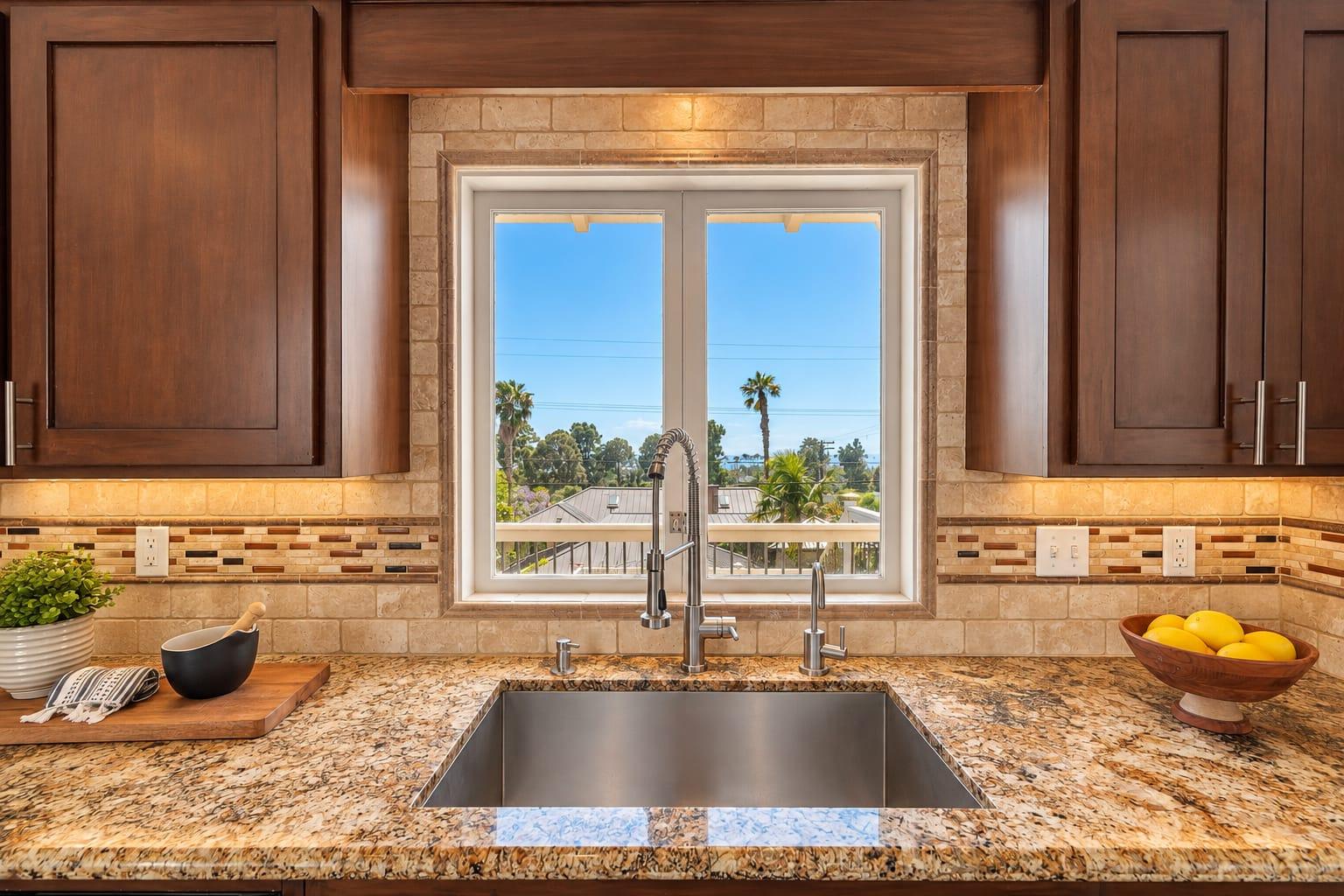
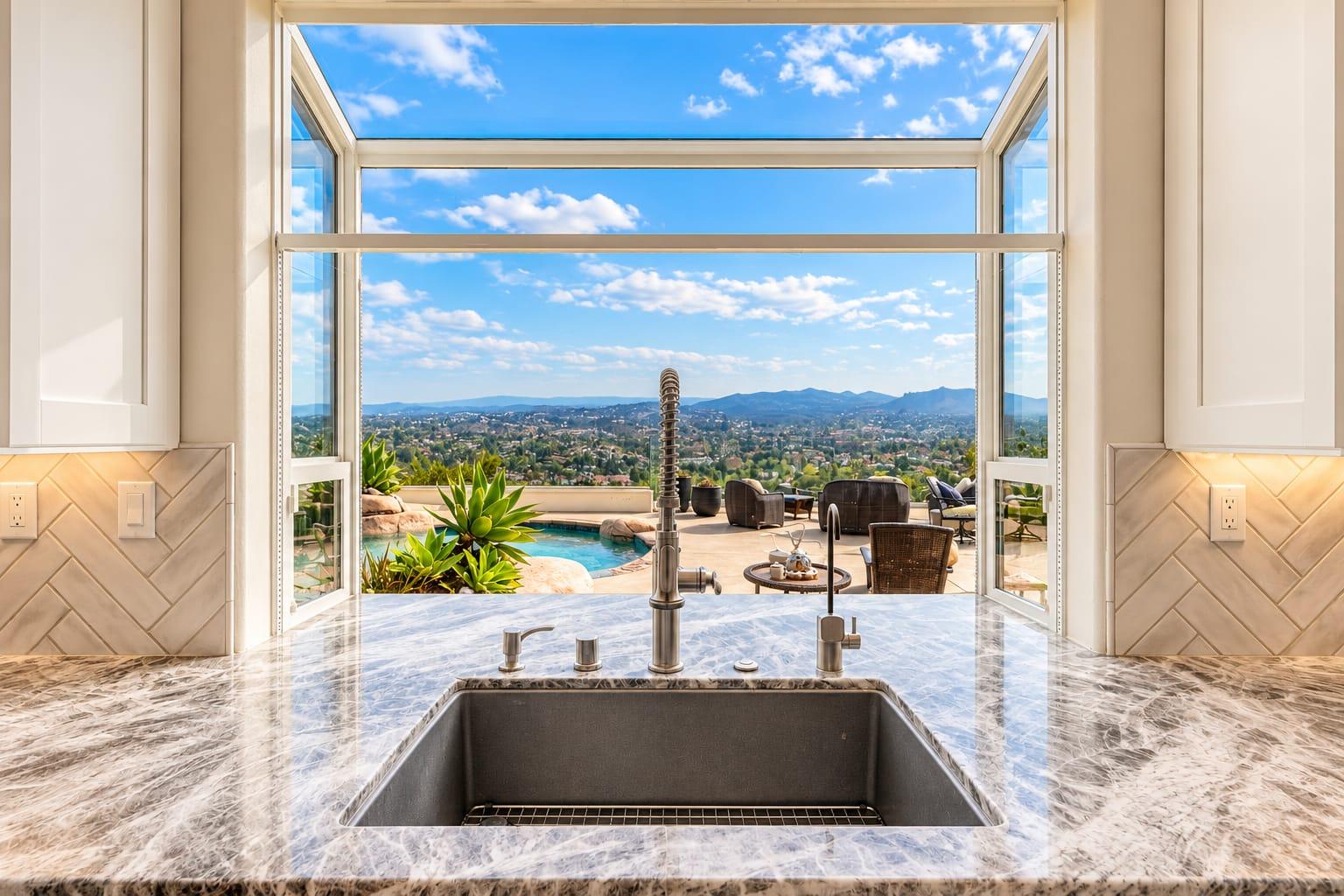
A kitchen vignette: cabinetry, counter, faucet, and a few styled objects.
Which details should interior designers photograph?
Hardware and fixtures. Pulls, faucets, sconces, switch plates.
Material transitions. Where stone meets wood, or tile meets plaster.
Custom work. Built-ins, millwork, upholstery, and pieces by local makers.
Textiles. Drapery, bedding, and upholstery texture, lit from the side.
Styled moments. A coffee table, a shelf, a bath tray.
Signature elements. Anything a client or editor would ask about.
Agree the list before the day. Detail frames are fast to forget when the big rooms take longer than planned.
How are detail and vignette frames composed and lit?
Shallow depth where it helps. A soft background keeps the eye on the subject.
Side light for texture. Window light from one side shows grain, weave, and edges.
A clear subject. One idea per frame, with nothing competing at the edges.
Styling for the camera. Objects placed closer together than they would be in life, because the lens spreads them out.
Verticals. Many details work best vertical, which suits magazine pages and Instagram.
Small styling changes make the biggest difference in detail frames: removing one object from a crowded surface, turning a vase so the light catches it, or adding a single branch for height. A good vignette usually has fewer things in it than it started with.
How do you style a vignette for the camera?
Start with the anchor: the piece of furniture or architecture the frame is about.
Add objects in odd numbers, varying height: one tall, one medium, one low.
Pull objects closer together than feels natural. The lens spreads them apart.
Leave negative space so the eye has somewhere to rest.
Check the frame on the camera's screen, not by eye, and adjust a centimeter at a time.
Florals and greenery add life, but keep them in proportion. A huge arrangement can overwhelm a small console.
How many details should you plan per room?
Two or three per hero room is a good starting point: one material or hardware detail, one styled vignette, and one signature element if the room has one. A kitchen might get the range hood, the island edge, and a styled counter. A primary bath might get the vanity hardware, the tile, and a bath tray. Secondary rooms often need only one.
Prioritize the details that tell the story of the project. If the client brief was about local craft, the maker pieces come first.
What are common mistakes in detail photography?
Too many objects. A crowded vignette reads as clutter on a phone screen.
Flat front light. Light from the camera's direction hides texture. Side light shows it.
Distracting reflections. Polished brass, glass, and lacquer reflect the photographer and the room. Angles and flags fix it.
Crooked lines. A shelf or counter edge that runs slightly off level pulls the eye away from the subject.
Forgetting the context. Pair each detail with a wide frame of the room, so viewers know where it sits.
Where do designers use detail photos?
Instagram and Pinterest, where close frames outperform wide rooms
Proposals, to show the level of finish a client can expect
Maker and vendor partners, who can license the frames that feature their work
How much does detail photography cost in San Diego?
Southern California editorial rate cards, checked November 2026.
Option
Market
Turnkey Media
Detail set added to a listing shoot
Varies by photographer
5 shots $125 · 10 shots $175
Detail and vignette add-on to an editorial day
Usually counted in the day's images
Quoted with the shoot
Extra finished images beyond a day rate
About $100 each in SoCal rate cards
Quoted with the shoot
Editorial half day
About $1,800–$1,950 in SoCal
From $1,500
For a finished project, details are best shot during the editorial day, while the styling is in place. See our half-day vs. full-day guide to plan the time.
Can makers and vendors use your detail photos?
Yes, with their own license. A cabinet maker, tile showroom, or lighting designer may want the frames that feature their work. Shared licensing means they pay for their use, and the cost of the shoot isn't carried by you alone. Agree who will license the images before the shoot. Our architectural and interior photographer cost guide explains how cost-sharing works.
Furniture makers, lighting brands, and tile and stone suppliers are the vendors who most often want to license detail frames from a designer's shoot, because their product looks its best styled in a finished room.
Frequently asked questions
What is a vignette in interior photography?
A small, styled scene within a room, such as a console with a lamp and books, photographed close.
How many detail shots should a project include?
Five to ten is a good range for most residential projects, alongside the wide frames.
How much do detail shots cost?
With us, five detail shots added to a shoot are $125 and ten are $175. On an editorial day, details are quoted with the shoot.
Can detail shots be added to a listing shoot?
Yes. For a luxury listing or a finished remodel, a detail set shows the finishes buyers and clients want to see up close.
Do detail shots need special lighting?
Usually soft side light from a window, sometimes shaped with a reflector or a small light, so texture and edges show.
Should detail shots be vertical?
Many work best vertical, which suits magazine pages and Instagram. Shoot key details both ways.
Can vendors use my detail photos?
Yes, with their own license from the photographer.
Planning a shoot
Tell us about the project and how you plan to use the images. We reply with a scoped quote.