AI-Altered Listing Photos: The 2026 MLS Compliance Playbook
AI photo detection is arriving at the MLS level and California's AB 723 is now enforceable. Here's what actually counts as an altered photo, what gets flagged, and the simple workflow that keeps San Diego agents compliant.
July 13, 20269 min read
What Shifted in 2026
For years, "everyone lightly edits listing photos" was true and largely unpoliced. That era is ending, and 2026 is the turning point for two reasons.
First, California's AB 723 is now in force. As of January 1, 2026, agents are required to conspicuously disclose when a listing image has been digitally altered in a way that could mislead a buyer, and to make the original, unaltered image available. Willful failure to disclose is no longer just a professional-courtesy problem — it carries real regulatory teeth.
Second, detection is getting automated. Industry reporting through 2026 describes AI-detection tools being piloted at the MLS and portal level that scan uploaded listing photos and flag likely alterations — sky replacements, added or removed objects, virtual furniture, altered facades. Reporting indicates San Diego's market has been among those exploring this kind of automated screening. The practical upshot: the assumption that no one is checking is no longer safe.
This guide covers what actually counts as an alteration, what these systems look for, and the simple workflow that keeps you compliant. It's general information, not legal advice — confirm specifics with your broker or counsel.
What Counts as an "Altered" Photo
Not every edit is a disclosure event. The line is whether the edit changes what a reasonable buyer would understand about the property.
Routine processing is fine and expected: exposure and white-balance correction, straightening verticals, lens-distortion cleanup, cropping, and standard color grading. These make an accurate photo look its best without changing what's there. You don't disclose these, and detection tools aren't chasing them.
The edits that require disclosure are the ones that change the substance of the image. The common ones on real listings: sky replacement (swapping a gray sky for a blue one), virtual staging (adding furniture to an empty room), removing or adding objects (erasing power lines, a neighbor's shed, or clutter; adding a fire in the fireplace), altering the view out a window, greening a brown lawn, or day-to-dusk / virtual twilight conversions. Anything AI-generated from scratch is squarely in this category.
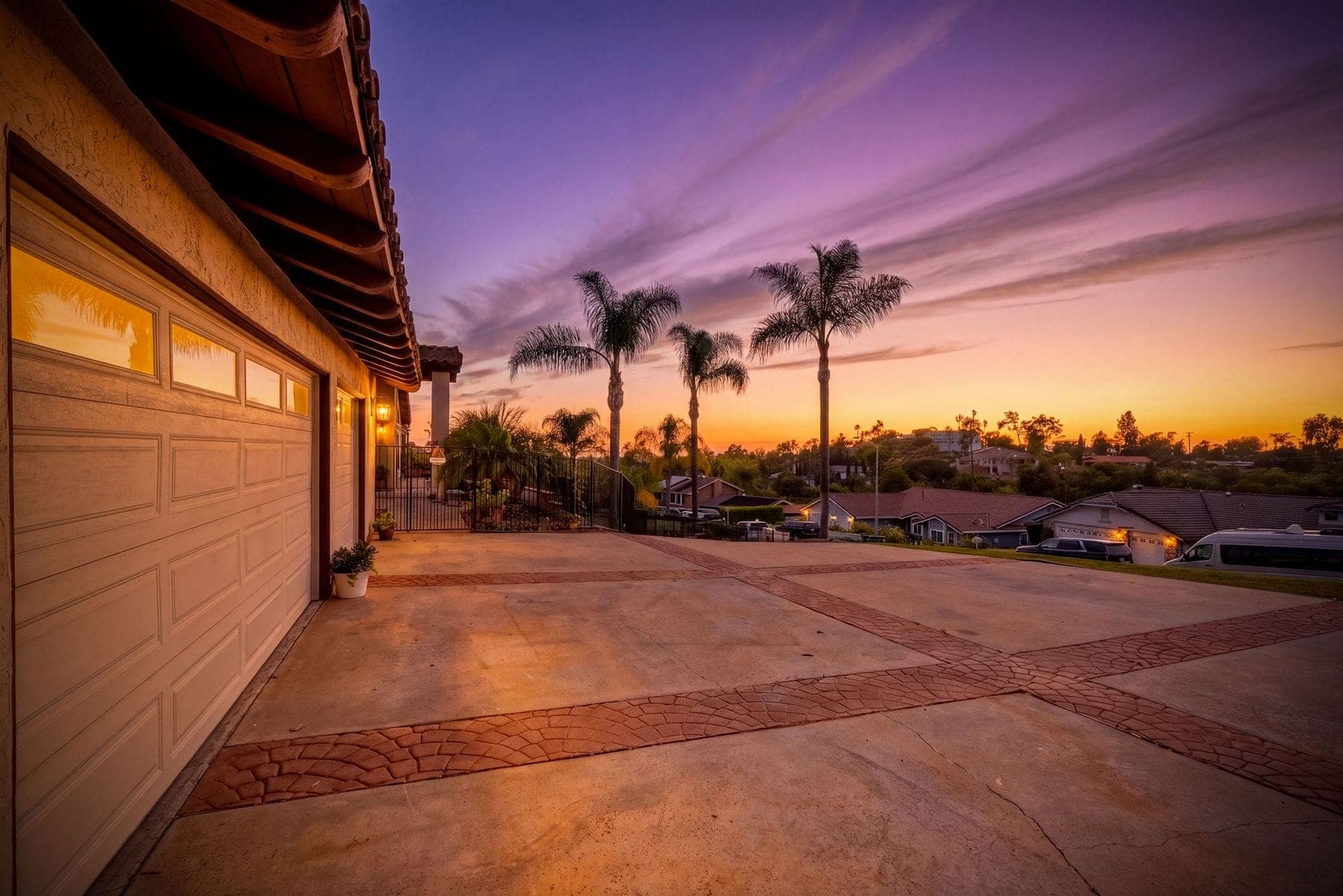
A useful test: if a buyer standing in the room or yard would be surprised that the photo doesn't match reality, it needs disclosure. Sky replacement is the single most common flagged edit in the wild — which matters in San Diego, where a real marine-layer morning tempts a lot of agents to swap in a bluebird sky.
What Automated Detection Looks For
You don't need to understand the technology to work with it — you need to know what trips it.
Detection systems compare an uploaded image against the statistical fingerprints of camera-original photos and against known signatures of common editing and generative tools. Sky replacements, cloned-out objects, and AI-generated furniture leave patterns these systems are increasingly good at spotting. When a photo is flagged, the typical consequence is a compliance notice: disclose it, provide the original, or replace the image.
The reason this matters even if your local MLS hasn't fully rolled it out yet: the direction is one-way. Portals and MLSs are under pressure — from regulators, from buyers burned by misleading photos, and from lawsuits — to clean this up. Building a compliant workflow now is cheaper than scrambling when a listing gets flagged mid-marketing, or worse, after an offer.
The good news is that compliance and detection aren't adversaries. If you disclose properly and keep the originals, a flag is a non-event — you already have exactly what the system is asking for.
The Compliant Workflow
Staying clean is genuinely simple if you build it into how you produce media. Four habits cover it.
Keep the originals. For any altered image, retain the unaltered camera-original. AB 723's requirement that the original be available is trivial to meet if you never discard it — and impossible to meet after the fact. This is where working with a professional helps: we deliver both the finished and the untouched originals as standard, so the compliant version always exists.
Disclose conspicuously, on the asset. Best practice — and where the rules are heading — is that the disclosure travels with the image, not buried in the remarks. A visible "Virtually Staged" or "Digitally Enhanced" label on the photo itself is the safest form, plus a line in the listing description. Don't rely on a caption a portal might strip.
Label the obvious offenders every time: virtual staging, virtual twilight / day-to-dusk, and any removed or added objects. These are the edits detection tools catch most reliably and buyers complain about most.
Prefer real over faked where it matters. When a genuine result is achievable — real twilight instead of a sky swap, actual decluttering instead of cloning — you sidestep the disclosure question entirely and deliver something a buyer can trust. That's often the better marketing call anyway.
How We Keep Your Listings Clean
We build compliance into delivery so you don't have to manage it shot by shot.
Every edited image comes with its unaltered original, so you always have the AB 723-required file on hand without asking. Anything we virtually stage or convert to virtual twilight is delivered clearly labeled and ready to disclose, and we'll flag which images in a set need a disclosure so nothing slips through.
Where a real result beats a faked one, we'll tell you — real on-location twilight instead of a sky replacement, a genuine reshoot instead of heavy cloning. And for the edits that are worth doing, we keep them on the right side of "enhanced" versus "misleading."
The bottom line for 2026: the safest listing is one where every altered image is disclosed and every original is on file. Handle that once, at the media level, and MLS flags and AB 723 both become things you're already covered for.
Quick answers
What changed for edited listing photos in 2026?
First, California's AB 723 is now in force. As of January 1, 2026, agents are required to conspicuously disclose when a listing image has been digitally altered in a way that could mislead a buyer, and to make the original, unaltered image available.
What counts as an altered listing photo?
Not every edit is a disclosure event. The line is whether the edit changes what a reasonable buyer would understand about the property.
How do I stay compliant with AB 723?
Keep the originals. For any altered image, retain the unaltered camera-original.