Do I Have to Disclose Virtual Staging or Edited Photos? A California Quick Reference
Yes, in California. Since January 1, 2026, AB 723 requires a listing photo that has been digitally altered to add, remove, or change elements of the property to carry a clear disclosure, with the unaltered original available to buyers. Virtual staging, virtual twilights, sky replacements, and object removal all count. Ordinary corrections like brightness, color, cropping, and straightening do not.
October 3, 20266 min read
By Tom Van Vechten · Updated
What is the short answer?
If the edit changes what a buyer would believe is at the property, disclose it. If the edit only makes a true photo look better, you don't need to.
That is the practical test. The legal text is in Assembly Bill 723, which added a section to the Business and Professions Code covering digitally altered images in real estate advertising. Our full AB 723 guide explains the law. This page is the quick reference.
This is a practical summary, not legal advice. For how the law applies to a specific photo or listing, ask your broker or an attorney.
Which edits need to be disclosed?
Edit
Disclose?
Why
Virtual staging
Yes
Adds furniture and decor that are not there
Virtual twilight (day to dusk)
Yes
Changes the sky and adds light
Sky replacement
Yes
Changes the scene
Virtual decluttering or item removal
Yes
Removes things that are there
Virtual renovation: new floors, paint, cabinets
Yes
Changes the property itself
Adding grass, landscaping, or water to a pool
Yes
Adds or changes features
Adding fire to a fireplace or an image to a TV
Yes, to be safe
Adds an element to the scene
Lot lines, labels, or drop pins on an aerial
Yes, to be safe
Adds elements to the image
Removing power lines, neighbors, or damage
Yes, and think twice
Changes what the buyer will see in person
The last row deserves a warning. Disclosure tells a buyer the photo was edited. It doesn't make it acceptable to hide a defect or a permanent feature of the surroundings. Other rules about misrepresentation still apply.
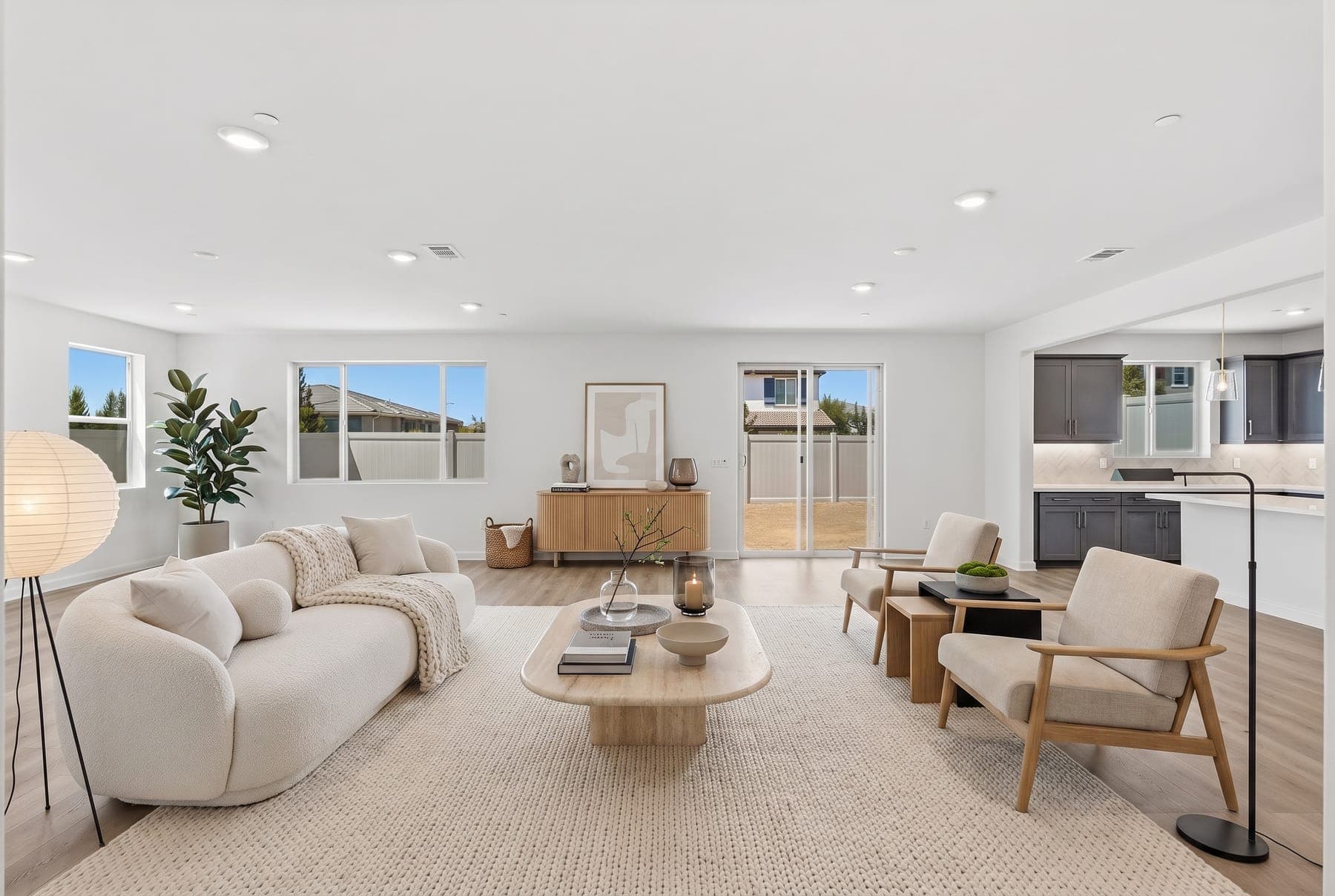
A virtually staged photo from one of our Escondido shoots. It is delivered labeled, with the empty-room original beside it.
Which edits don’t need disclosure?
The law excludes common photo adjustments that don't change how the property is represented. In practice:
Brightness and exposure
Color correction and white balance
Sharpening
Cropping
Straightening and correcting the angle
Blending several exposures of the same scene, which is how HDR photos are made
These are what turns a camera file into a finished photo. Every professional listing photo has them.
What does the disclosure have to include?
Two things:
A statement that the image has been digitally altered, placed where a reasonable person will see it, on or next to the image.
Access to the unaltered original. Either include the original image in the listing, or give a link, web address, or QR code to where the original can be viewed.
The simplest way to meet both is to place the original photo directly after the edited one, and label the edited one. For example: "Virtually staged. Original photo follows." For a twilight: "Digitally altered: virtual twilight. Daytime original follows."
Use the same wording every time. Consistency is easier to defend than creativity.
Where does the disclosure have to appear?
Everywhere the altered image is used to advertise the property. That includes:
The MLS and the portals it feeds
Your website and the brokerage’s website
Social media posts and ads
Email campaigns
Print: flyers, brochures, postcards
Social media is where agents slip. A virtual twilight posted to Instagram without a label is the same altered image without its disclosure. Put the label in the image or the caption, and include the original as a second slide or a link. See what to post for each listing.
Your MLS has its own rules on top of the state law, including how staged photos must be labeled and whether edited images can be the first photo. Check its current policy, and see our MLS compliance playbook for altered photos.
Who is responsible, the agent or the photographer?
The duty falls on the real estate licensee who uses the image in advertising. Your photographer can make it easy or hard, but the listing is yours.
Ask every photographer and editor you use two questions: do edited images come labeled, and do I get the originals? If you order an edit from an overseas editing service or use an AI tool yourself, you are the one who has to keep the original and add the label.
We deliver edited images labeled, alongside their originals, so you have both files for every altered photo.
What should I check before I publish a listing?
Go through the photo set and mark every image that was altered
Confirm each one has a visible label
Confirm the original is in the set, or linked
Add a line to the listing remarks, such as "Some photos are virtually staged"
Use the same labeled versions for social media and print
Save the originals and the edited versions with the transaction file
Do I have to disclose virtual staging in California?
Yes. Under AB 723, effective January 1, 2026, a virtually staged listing photo must be disclosed as digitally altered, with the unaltered original available to buyers.
Do I have to disclose a virtual twilight?
Yes. Converting a daytime photo to dusk changes the sky and adds light, which makes it a digitally altered image.
Do I have to disclose color correction or HDR?
No. Common adjustments such as exposure, color, white balance, sharpening, cropping, and straightening are not treated as digital alteration.
Do I have to disclose edited photos on Instagram?
Yes, when the altered image is used to advertise the property. Put the label on the image or in the caption and include or link the original.
Can I remove power lines from a listing photo if I disclose it?
Disclosure covers the editing, but removing a permanent feature buyers will see in person risks misrepresenting the property. Leave it in.
Who is responsible for the disclosure?
The real estate licensee who uses the image in advertising. A photographer can supply labeled images and originals, but the listing agent is responsible for the listing.
Ready when your listing is
Book your shoot online in a few minutes. Photos are delivered the next day.