Virtual Staging for New Construction in San Diego: When Builders Should Use It
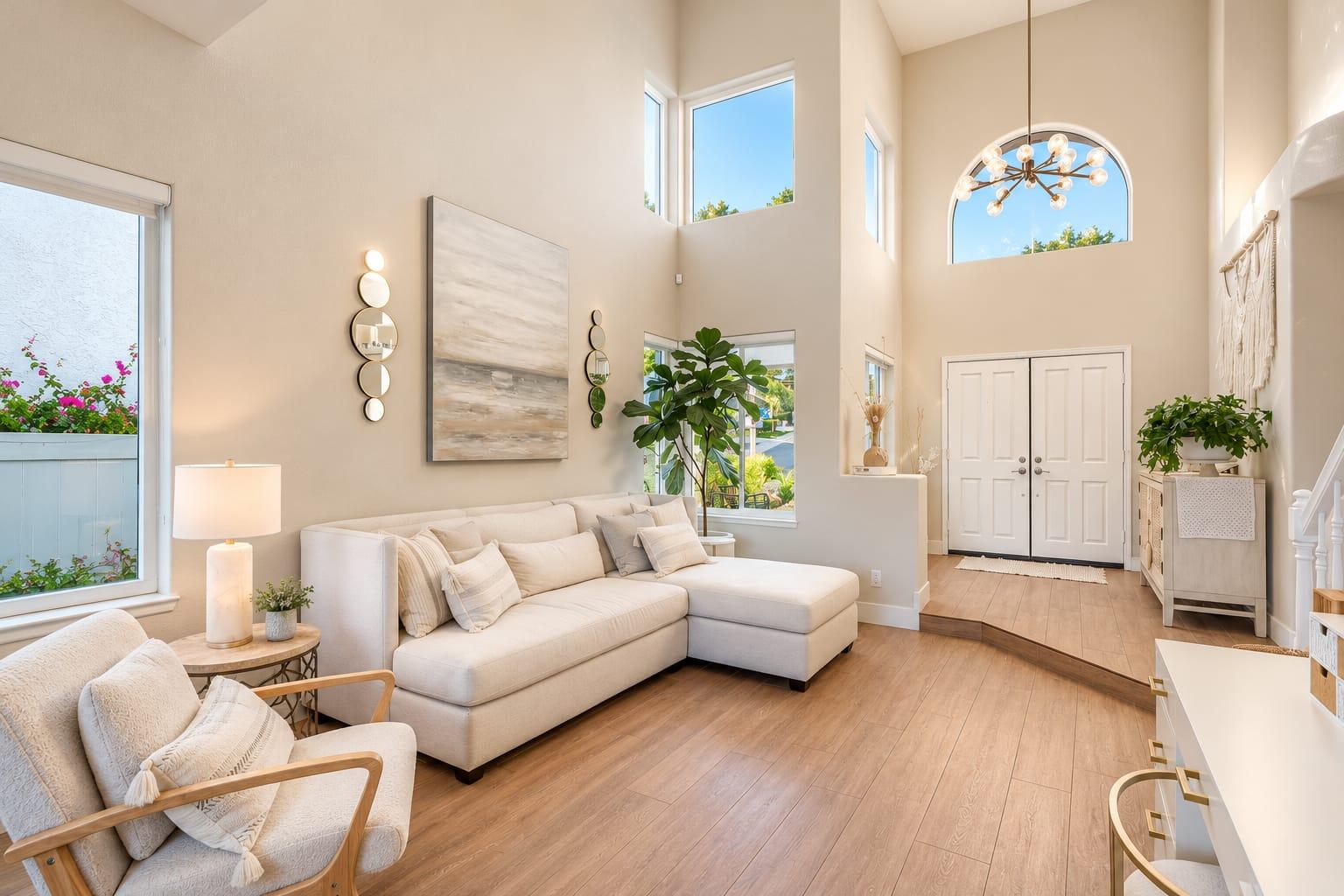
Virtual staging furnishes photos of an empty new home digitally, so buyers can see scale and layout without the cost of physical staging. For San Diego builders, it works best on quick-move-in homes and spec homes that will sell empty, staging two or three hero rooms and leaving the rest bare. With us it costs $35 per photo for the first 5 and $25 after that, against roughly $2,800–$8,000 or more for physical staging in San Diego, and every staged photo must be labeled.
General information, not legal advice. Rules change; confirm with the agency or an attorney before you rely on them. Read the full disclaimer.
November 7, 20267 min read
By Tom Van Vechten · Updated
Why do builders use virtual staging?
New homes photograph well, but empty rooms are hard to read. Buyers can't tell whether a king bed fits the secondary bedroom or where the sofa goes in the great room. Furnished models solve that for the plan, but a quick-move-in home down the street is empty, and its listing photos have to stand on their own.
Virtual staging fills the gap without trucks, rental fees, or a delay. It's especially useful for spec homes listed on the MLS, where buyers compare against resale homes that are furnished.
Which rooms should be virtually staged?
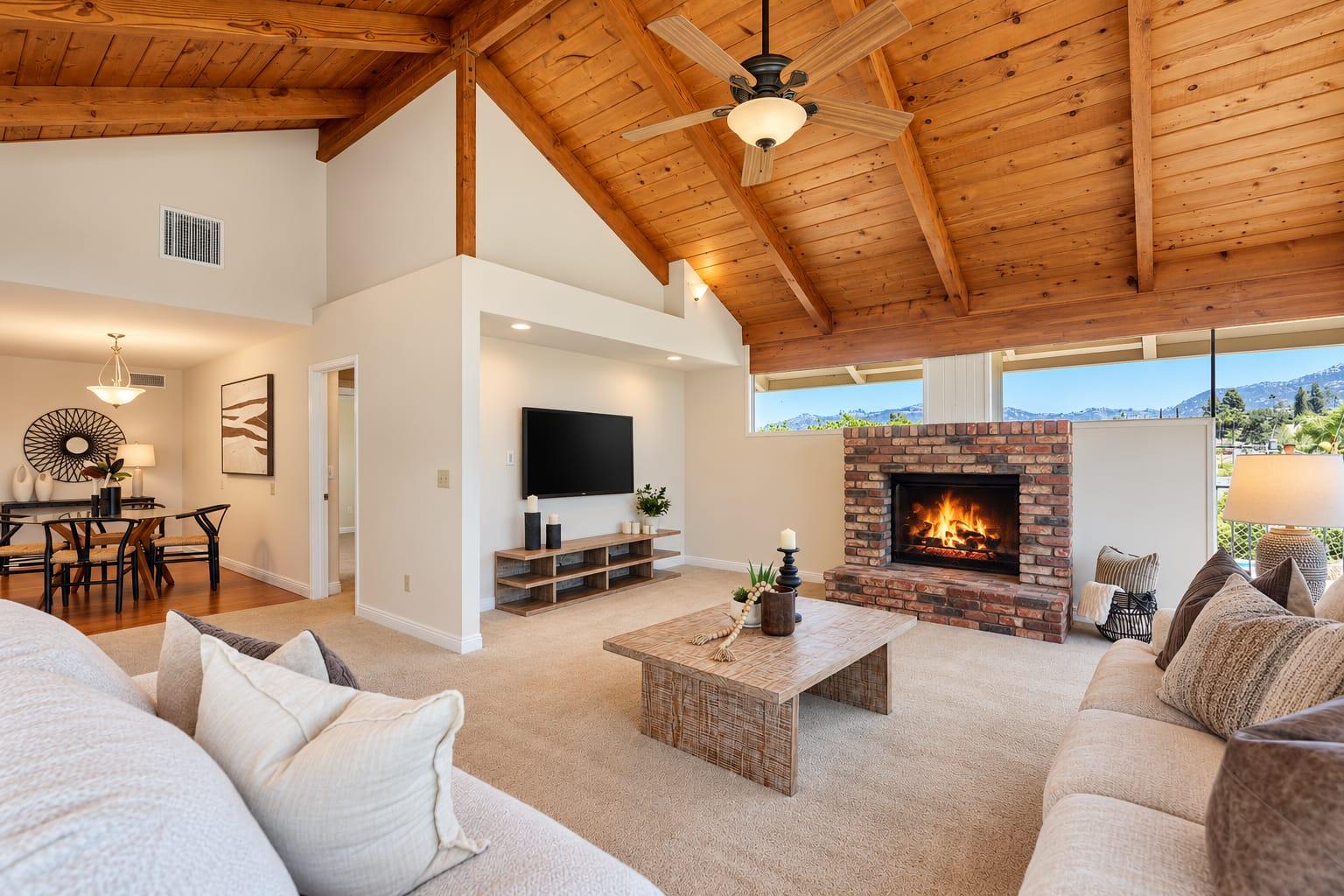
The great room. It shows the scale of the main living space and how it connects to the kitchen.
The primary bedroom. Buyers want to see the bed and nightstands fit.
A flex room or loft. Staging shows how an ambiguous space can be used: an office, a playroom, a guest room.
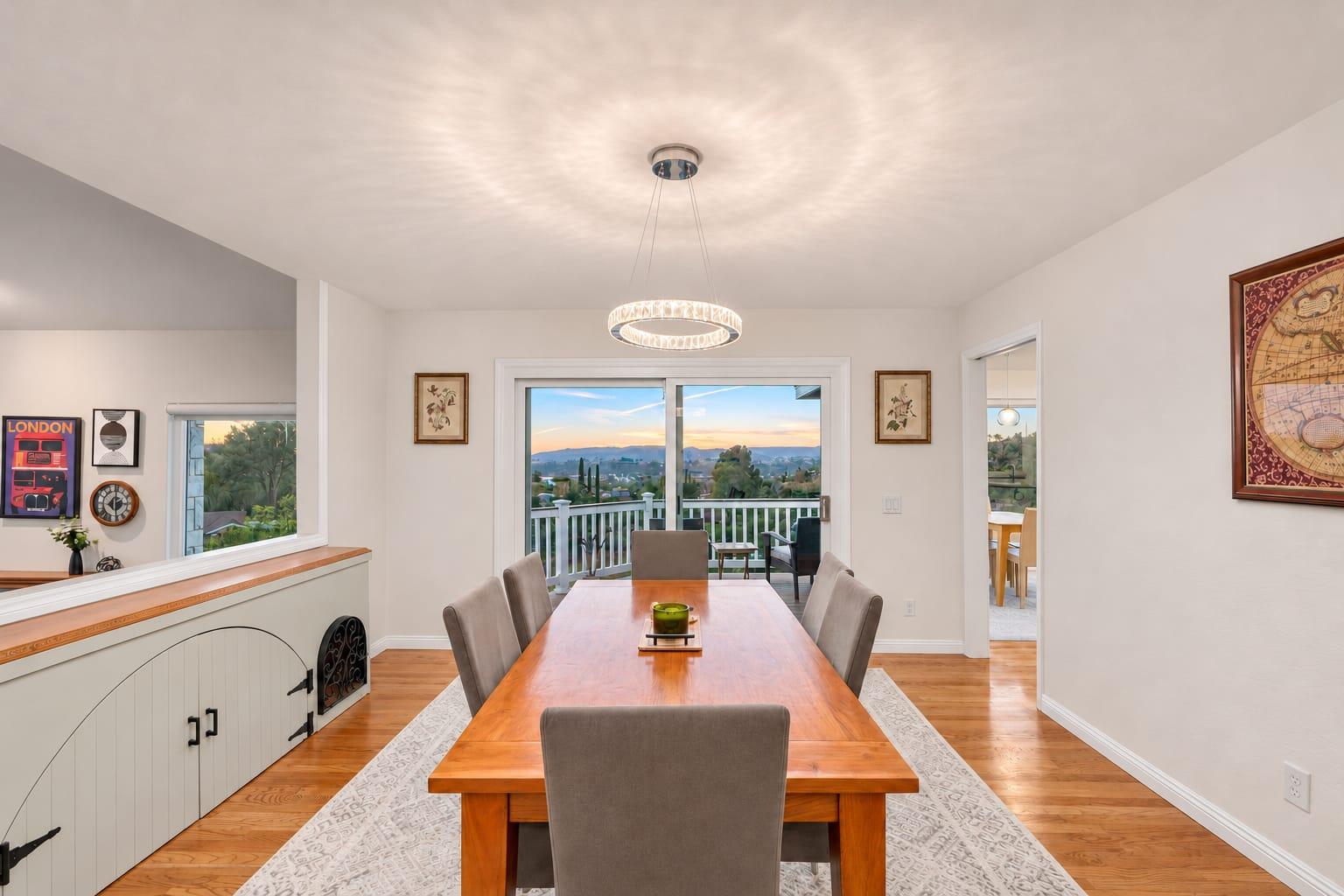
Dining, if it's a separate space.
Leave the kitchen and bathrooms as they are. They're already finished, and staging adds little. Two to four staged photos are usually enough.
How does virtual staging compare with physical staging and models?
Physical staging range from published San Diego stager rates, checked November 2026.
Virtual staging
Physical staging
Furnished model
Cost in San Diego
$35 per photo (first 5) with us
About $2,800–$8,000+
Merchandising budget per plan
Works during showings
No
Yes
Yes
Timing
Delivered with the photos
Install and remove
For the life of the model
Best for
Quick-move-in and spec listings
High-end spec homes with showings
One per plan at the sales center
For a luxury spec home with frequent in-person showings, physical staging can still be worth it. For most quick-move-in homes, virtual staging handles the online first impression at a fraction of the cost.
How do you keep virtual staging honest?
Label every staged photo in the listing and on the image itself where the platform allows.
Never change the house. Staging adds furniture; it doesn't change floors, walls, windows, or views.
Use realistic furniture sizes, so buyers aren't misled about scale.
Keep an unstaged version of every staged photo available.
California's AB 723 requires real estate agents, and anyone acting on their behalf, to disclose digitally altered photos in sale advertising, with the original available. If your homes are sold through a licensed sales team or broker, assume it applies, and label virtually staged images either way. Our AB 723 guide covers the rule, and our guide to virtual staging in California covers the details.
How should empty rooms be photographed for virtual staging?
The staging can only be as good as the photo underneath. Shoot each room to be staged from a corner, at chest height, with the camera level so verticals are straight. Keep the floor visible, because that's where the furniture goes. Balance the windows so the outside still shows, and turn on every light. Avoid ultra-wide lenses: furniture placed into a stretched room looks wrong, and the room looks bigger than it is.
Shoot one extra angle of each staged room. It gives the stager a choice, and it gives you an unstaged frame of the same room for the listing.
What are common virtual staging mistakes in new homes?
Staging every room, so the listing looks fake
Furniture too large or too small for the room
Styles that clash with the home or the community's models
Forgetting to label staged photos
Changing finishes, lighting, or views, which crosses from staging into misrepresentation
What style should staging use in a new San Diego home?
Match the buyer and the architecture. Coastal communities suit light, relaxed furniture; inland family communities suit practical, warm styles; modern urban townhomes suit clean lines. Keep it consistent with the community's furnished models, so the online listings and the sales center feel like the same brand.
On new construction, staging styles that match the community's design, often a clean modern look, tend to work best, especially in the main living space and primary bedroom.
How much does virtual staging cost for a new home?
With us, $35 per photo for the first 5 photos and $25 per photo after that. Staging three hero rooms comes to a little over a hundred dollars, compared with thousands for physical staging in San Diego. For builders who want the whole finished home photographed to match their models, our finished or model home package starts at $1,500. See builder photography.
How does the virtual staging workflow work?
Photograph the empty home after the final clean, with the rooms you plan to stage shot from their best angles.
Choose the rooms and a style.
Receive the staged images with the rest of the photos.
Publish the staged photos with labels, and keep the originals available.
Builders and listing agents commonly use virtual staging on quick-move-in homes to help buyers picture the space before a model is available.
Frequently asked questions
How much does virtual staging cost for new construction in San Diego?
With us, $35 per photo for the first 5 and $25 after that. Physical staging in San Diego runs about $2,800–$8,000 or more.
Which rooms should be virtually staged in a new home?
The great room, primary bedroom, and any flex room. Kitchens and bathrooms rarely need it.
Do I have to disclose virtual staging in California?
If a licensed agent or broker markets the homes, yes: AB 723 requires the disclosure, with the original available. Labeling virtual staging is good practice even when it does not strictly apply.
How should empty rooms be photographed for staging?
From a corner at chest height, level, with the floor visible and the windows balanced. Avoid ultra-wide lenses.
What style of staging works best?
One that matches the home, the buyer, and the community's furnished models, so the brand feels consistent.
Is virtual staging a replacement for a furnished model?
No. Models work in person; virtual staging handles the online first impression for homes that sell empty.
Can virtual staging change finishes or flooring?
It should not. Staging adds furniture only, so buyers find the home they saw.
Planning a shoot
Tell us about the project and how you plan to use the images. We reply with a scoped quote.