How Many Photos Should a Real Estate Listing Have? By Home Size and Price Point
Most listings need 25 to 40 photos. A condo or small home is well covered by about 25, a typical single-family home by 25 to 40, and a large or luxury property by 40 to 60. The right number is the one that shows every room and feature once, with no weak or repeated frames.
October 3, 20266 min read
By Tom Van Vechten · Updated
How many photos does a listing need by home size?
Working ranges from our own shoots, not an industry rule.
Home
Photos
Why
Studio or one-bedroom condo
15–25
Few rooms. Add the building, the amenities, and the view
Condo or townhome, 2–3 bedrooms
25
Every room once, plus exterior and community
Single-family, under 2,500 sq ft
25–40
Two angles of the main rooms, one of each bedroom and bath, front and back
Single-family, 2,500–4,000 sq ft
40
More rooms, more outdoor space
Large or luxury, 4,000+ sq ft
40–60
Grounds, guest house, pool, views, and detail shots
We sell photos in three counts for that reason: 25 for $185, 40 for $235, and 60 for $285. Photos are priced by count, not by the size of the home, so you choose the number that fits the property. Drone photos are counted separately. Current prices are on the pricing page.
Does the price point change the number?
Yes, but mostly because of what the home has, not what it costs. A higher-priced home usually has more to show: a second living area, an office, a pool, a view, a detached unit. Each of those needs its own frames.
Price also changes what the seller expects. A seller at $3 million who sees 22 photos will ask why. At that level, plan for detail shots as well: the range, the stonework, the wine room, the built-ins. These are the frames that show quality, and they are the first ones cut when the count is too low. Our guide to luxury listing marketing in Rancho Santa Fe, Del Mar, and La Jolla goes further.
At the entry level, the opposite mistake is common. A 900 sq ft condo with 45 photos has the same kitchen from five angles. That makes the home feel smaller, not larger.
How should the photos be split between rooms?
A useful split for a 40-photo set on a single-family home:
Area
Photos
Front exterior
2–3
Living and family rooms
5–7
Kitchen and dining
5–7
Primary bedroom and bathroom
4–6
Other bedrooms and bathrooms
6–8
Office, laundry, bonus spaces
2–4
Backyard and outdoor living
5–7
Details and views
2–4
Spend your frames where buyers spend their attention. The kitchen, the main living space, the primary suite, and the yard carry the listing. A secondary bedroom needs one good photo, not three.
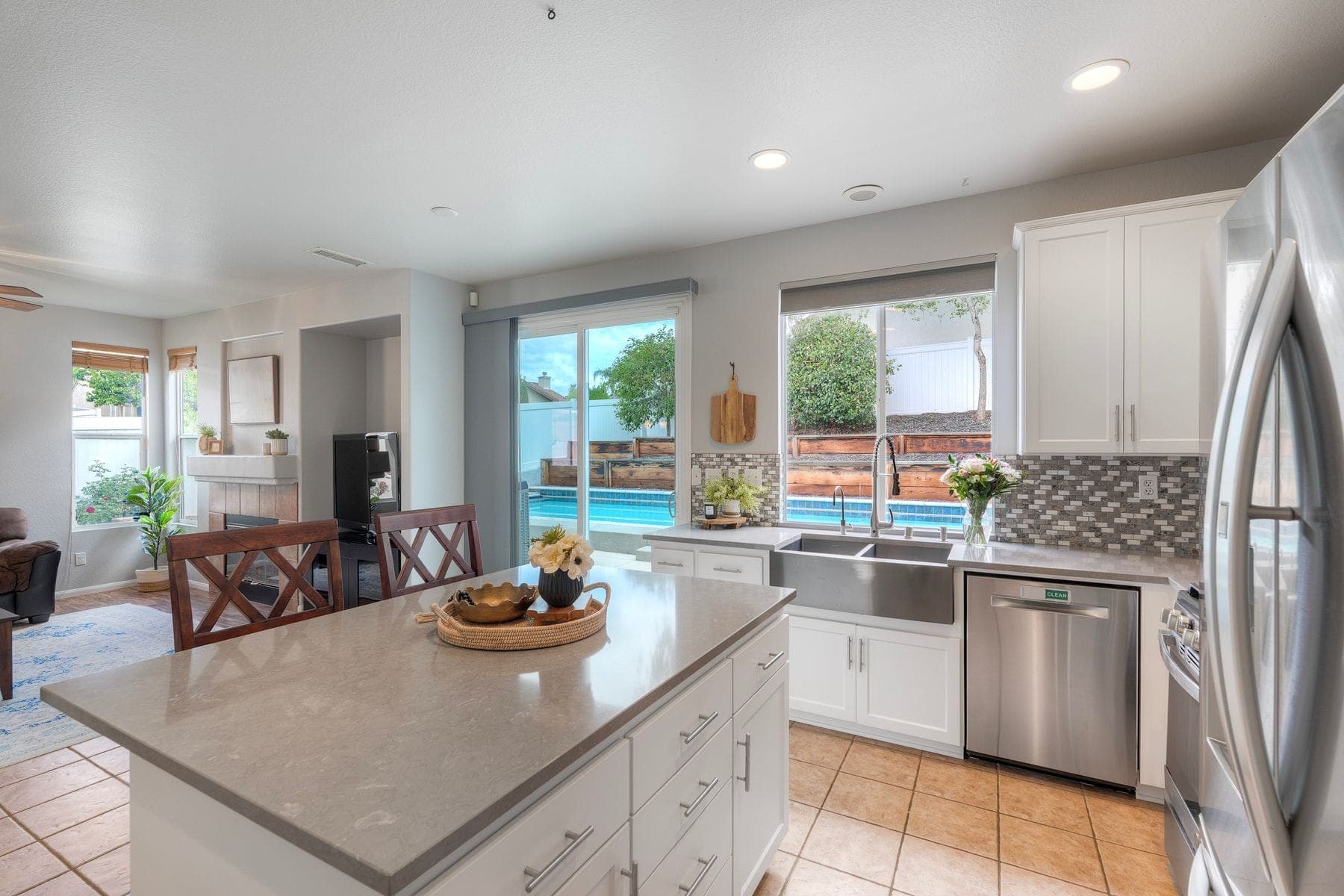
A kitchen earns more than one frame. This is one of several angles from a Fallbrook shoot.
Can a listing have too many photos?
Yes. Buyers don't look at all of them. Most decide from the first handful whether to keep going, and a long set of near-duplicates buries the good ones. Signs you have too many:
The same room appears from three or more angles that show nothing new
There are photos of hallways, closets, or the water heater with no reason to be there
A weak room gets as many frames as the kitchen
The set includes photos you would not choose as a cover
Cutting ten weak photos improves a listing more than adding ten. If you aren't sure which ones are weak, run the set through our good vs. bad listing photos check.
What happens when there are too few?
Buyers fill the gaps with doubt. A listing that skips a bathroom or the backyard makes people assume something is wrong with it. A short set also gives a buyer fewer reasons to save the listing or book a showing.
The floor is one photo of every room and outdoor area a buyer would ask about. If a room is in poor shape, it is usually better to show it honestly than to leave it out. The buyer will see it at the showing either way.
Are there MLS or portal limits?
Each MLS sets its own minimum and maximum number of photos, and the limits change. Check your MLS's current rules, including whether the first photo must be an exterior. Portals display photos in the order you upload them, so the order is yours to control.
Edited photos have their own rule in California. Under AB 723, a digitally altered image, such as a virtual twilight or a virtually staged room, must be labeled, with the original available. Placing the original right after the edited version covers both. See the AB 723 guide. Those extra originals add to your count, so allow for them.
What order should they go in?
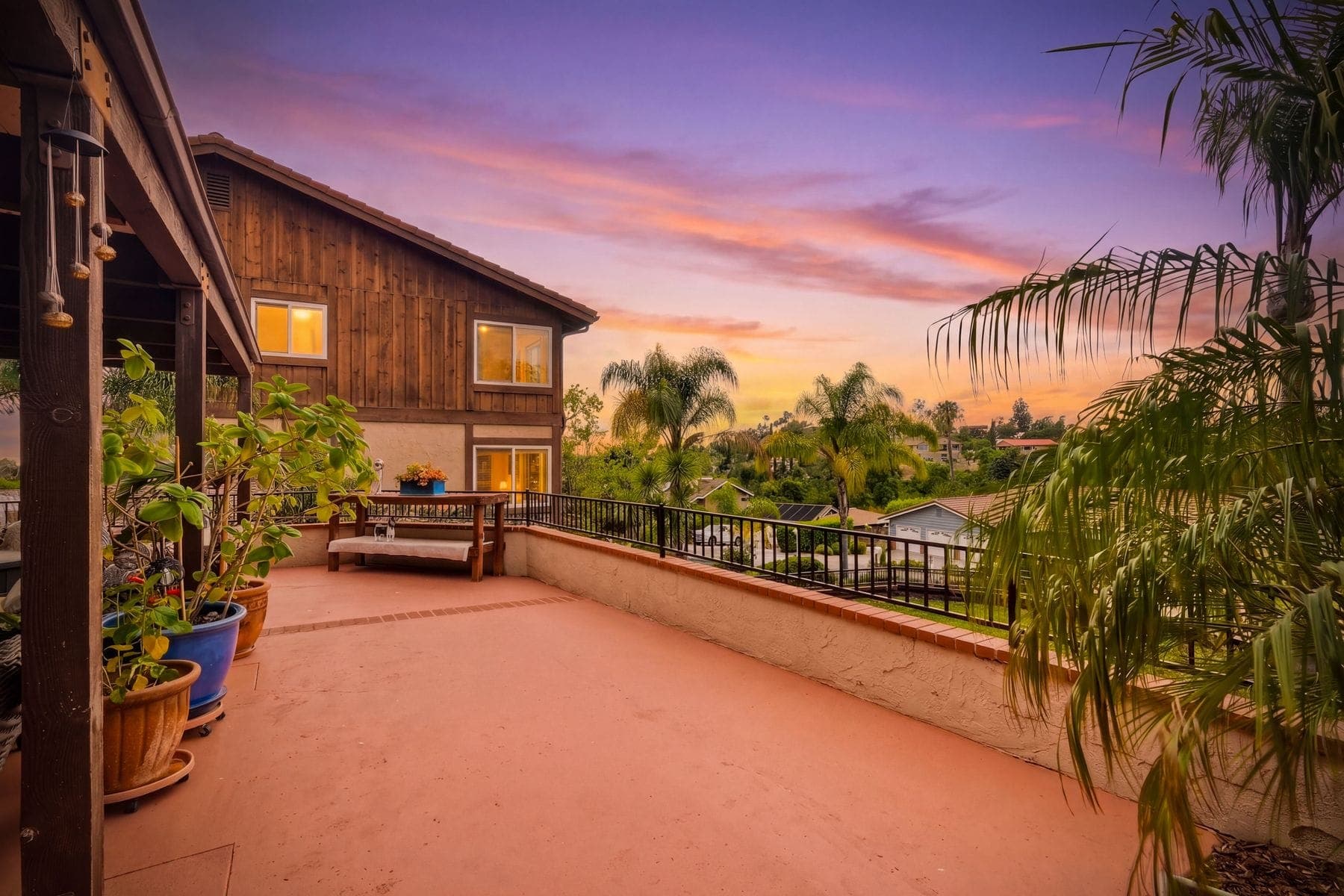
Your strongest image: often a twilight exterior or the main view