How Virtual Staging Works: From Empty Room to Listing Photo, Step by Step
Virtual staging starts with a professional photo of an empty room, then a designer adds furniture, rugs, art, and decor digitally, scaled and lit to match the room. You pick a style, choose which rooms to stage, and get the staged photos back the next day alongside the unstaged originals. In California, digitally altered listing photos must be disclosed. With us, virtual staging is $35 per photo for the first 5 and $25 each after that.
General information, not legal advice. Rules change; confirm with the agency or an attorney before you rely on them. Read the full disclaimer.
November 10, 20267 min read
By Tom Van Vechten · Updated
What is virtual staging?
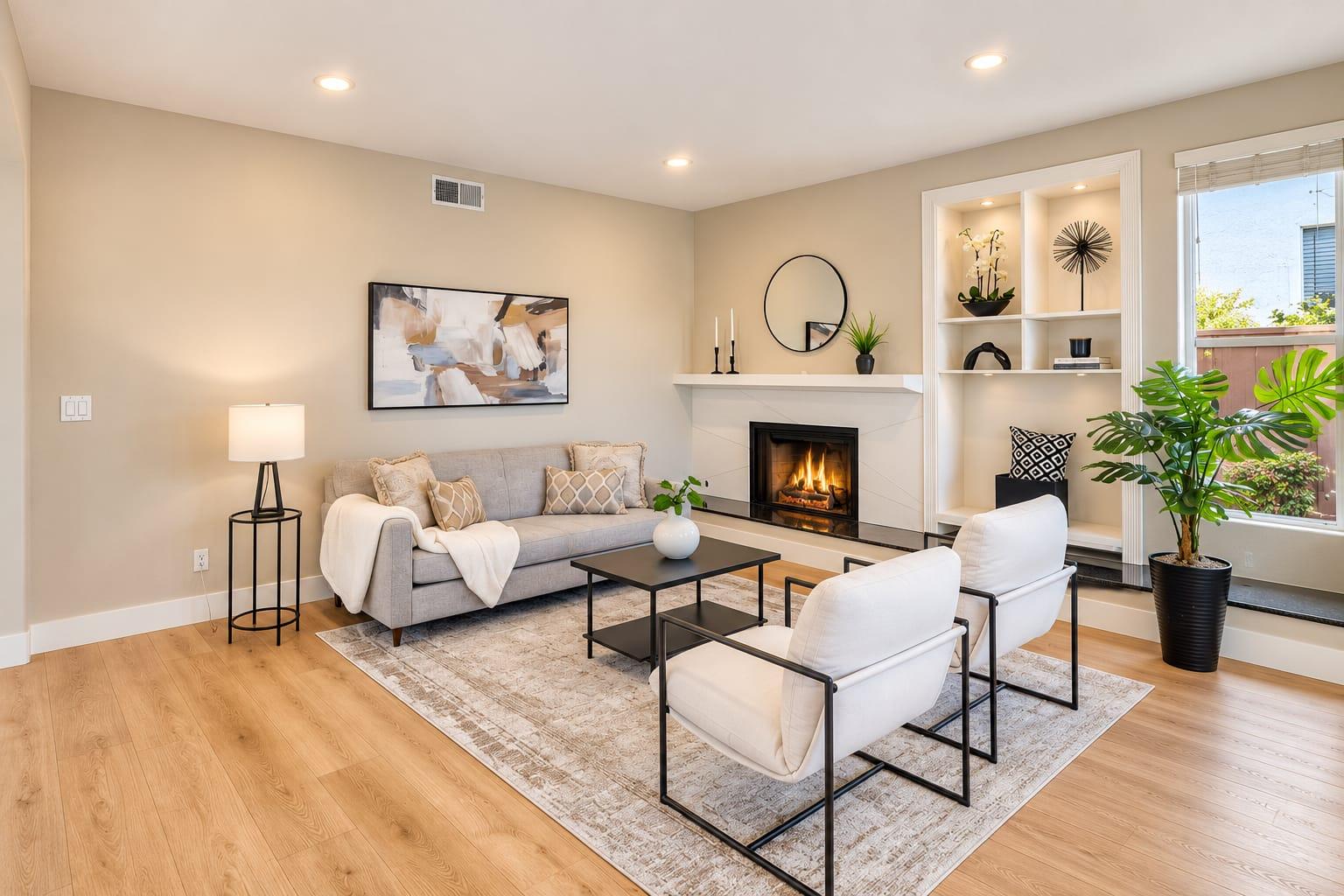
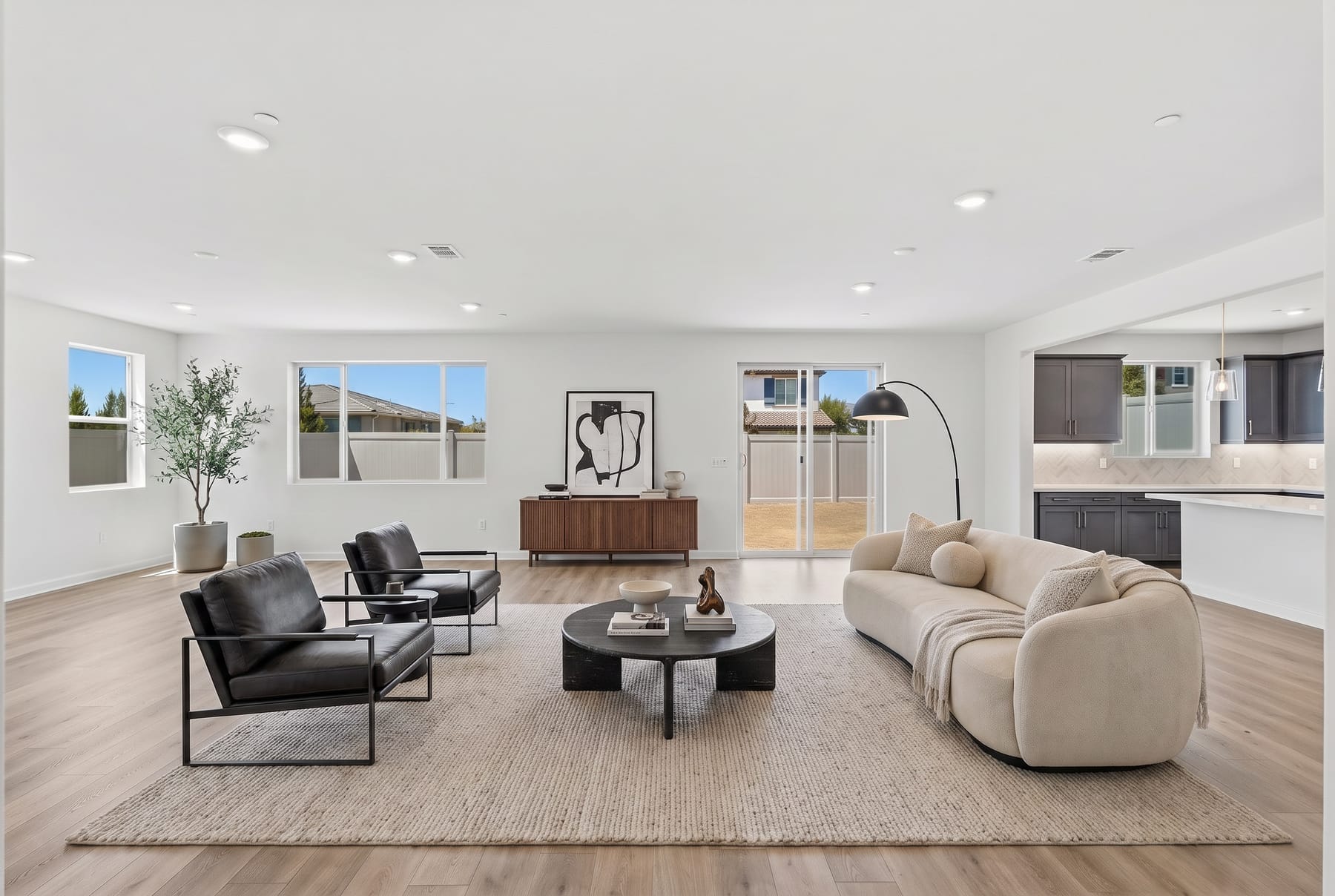
Virtual staging is furniture and decor added to a photo of an empty room in editing, instead of moved into the house. Buyers scrolling an online listing see a furnished living room, bedroom, or dining area, which helps them understand the size of the space and how it could be used. The home itself stays empty, so there's no furniture rental, delivery, or removal.
It works best on vacant homes, new construction, and rooms that are empty or nearly empty. It isn't meant to hide a room's condition or change the home itself.
Step 1: How should the empty room be photographed?
Staging can only be as good as the photo underneath it. The empty room should be shot level, from a natural height and corner, with the windows balanced and the floor clearly visible, since the furniture sits on it. A wide but undistorted angle leaves room to place a sofa, a bed, or a dining table believably. Clean the room first: anything left on the floor, walls, or counters has to be removed in editing.
The empty-room frame that stages best is usually from the corner opposite the main window, so the light falls the same way on the virtual furniture as it would on real pieces.
Step 2: How do you choose a staging style?
Choose the style buyers for this home would expect: clean and modern for a new build, warm and casual for a coastal cottage, more formal for a luxury home. Keep one style across every staged room, so the listing feels like one home. Match the finishes that are already there, like the floors, cabinets, and light fixtures, so the furniture looks like it belongs.
Step 3: Which rooms should be staged?
Living room or great room, the frame buyers see most.
Primary bedroom, to show the bed fits with room to spare.
Dining area, especially in open plans where it's unclear where the table goes.
An awkward or flexible room, like a loft or bonus room, staged as an office or den.
Outdoor living, sometimes, when an empty patio looks unused.
Kitchens and bathrooms rarely need staging. Most listings need four to six staged photos, not every room.
Step 4: How is the furniture placed?
A designer places furniture at the right scale for the room, with shadows and light that match the photo, and leaves walkways clear the way a real stager would. Good virtual staging shows a believable layout: a sofa that fits the wall, a bed with room on both sides, a table with space for chairs. Furniture that's too large, too small, or floating is what gives poor staging away.
Does virtual staging need to be disclosed in California?
Yes. California law requires listings to disclose digitally altered photos, including virtual staging, and to make the unaltered version available. That's why staged photos are delivered alongside the empty-room originals. Our guide to virtual staging cost and California rules and our AB 723 page cover the details.
Agents most often ask where the disclosure should go, and the simplest answer is a short note on the staged photo itself plus the unaltered original in the gallery.
How long does virtual staging take?
Staged photos arrive the next day. If the listing photos and the staging are booked together, the empty-room photos are shot during the listing shoot and the staged versions follow the next day, so the listing can go live with both.
Is virtual staging as good as physical staging?
They do different jobs. Physical staging changes how the home feels in person at showings and open houses. Virtual staging changes only the photos, at a fraction of the cost. Many agents use virtual staging for vacant homes where physical staging isn't in the budget, or for a few rooms the physical stager didn't furnish. Our home staging photography guide covers photographing a physically staged home.
What are the most common virtual staging mistakes?
The most common is furniture at the wrong scale: a sofa that would never fit the wall, or a bed that fills the whole room. Others include a style that clashes with the home, staging every room in the house including the kitchen and baths, and staging a photo that was shot too dark or at a strange angle. The fix is the same each time: start with a good empty-room photo, stage only the rooms that need it, and keep the furniture true to the room's real size so buyers aren't surprised when they visit.
How much does virtual staging cost?
Per staged photo. Unstaged originals are delivered with the staged versions.